Diabetes Drugs for NEET PG Pharmacology: ICMR Type 2 Ladder, DKA Protocol, Insulin, Metformin, SGLT2 Inhibitors, GLP-1 Agonists
Start Here
🎯 Exam priority: Very high. Expect: the first drug for a new diabetic by HbA1c, metformin and contrast, a DKA vignette (fluids, potassium, insulin), SGLT2 inhibitor ketoacidosis with normal glucose, pioglitazone in heart failure and GLP-1 agonists in MEN 2.
CBME mapping: PH 7.1–7.2. Indian protocols: ICMR Type 2, Type 1 and DKA workflows (July 2022).
Type 2 Diabetes: ICMR Start and Targets
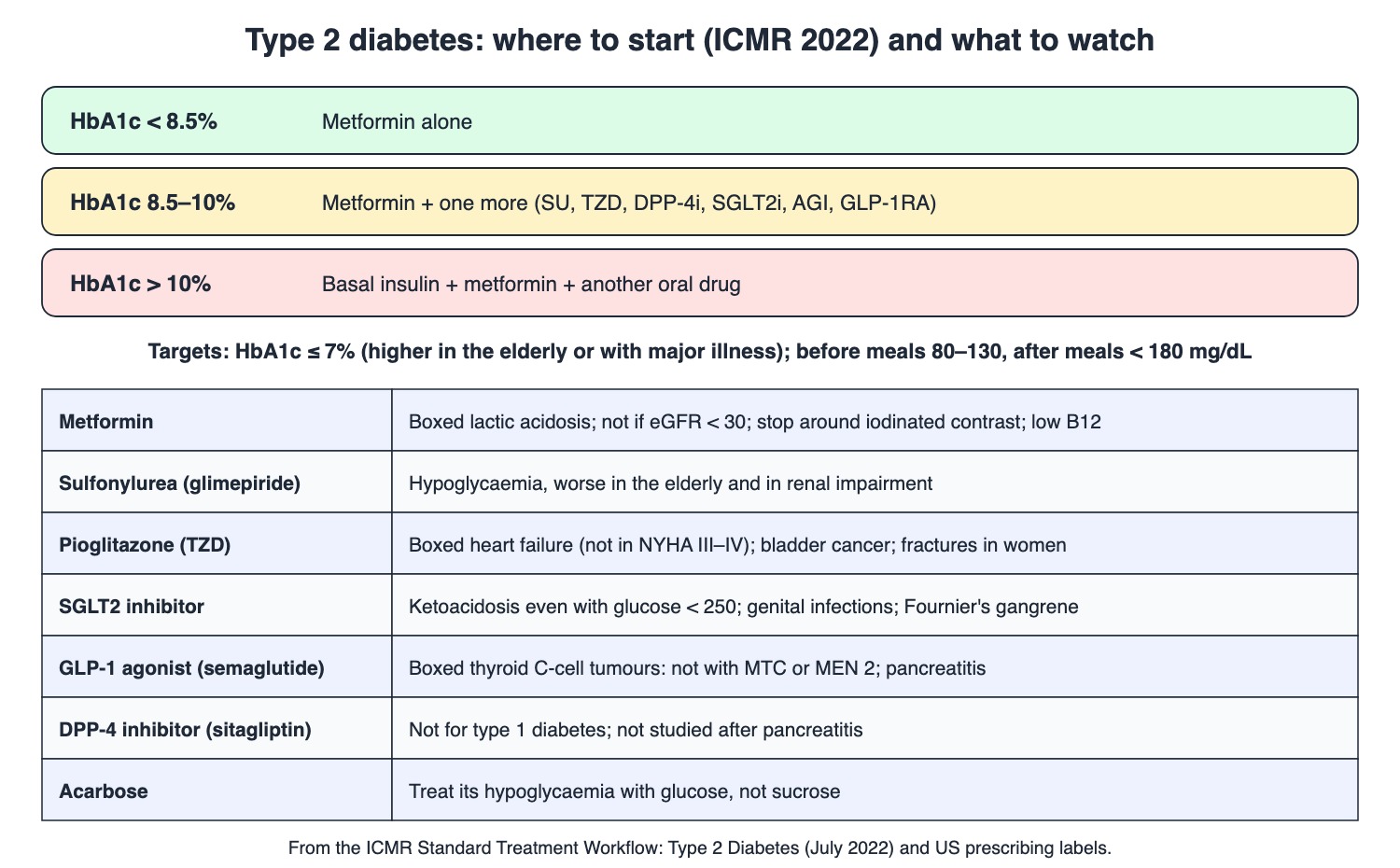
Type 2 diabetes: starting treatment by HbA1c (ICMR 2022) and the key warning for each drug class. Drawn by TrackNation.
Diagnosis: FPG ≥ 126, 2-h OGTT ≥ 200, HbA1c ≥ 6.5%, or random ≥ 200 mg/dL with symptoms. Prediabetes: HbA1c 5.7–6.4%.
Targets: HbA1c ≤ 7%; BP < 140/90 (< 130/80 in CKD).
Screen adults with BMI ≥ 23 (≥ 27.5 if obese) plus a risk factor. Pregnancy: FPG in the first trimester (92–125 = GDM; ≥ 126 = pre-existing diabetes); otherwise 75 g OGTT at 24–28 weeks; retest 6 weeks after delivery.
Eyes checked at diagnosis and every year.
Type 1 Diabetes and Hypoglycaemia (ICMR)
Basal-bolus: total 0.25–1.0 U/kg/day; basal (glargine, detemir or NPH) 40–50%; bolus (regular or rapid-acting) the rest, split before three meals.
Sick days: keep the usual insulin; check ketones if glucose > 250; extra regular insulin every 6 hours (10–15% of the daily dose).
Hypoglycaemia (< 70 mg/dL): 3 teaspoons of glucose or sugar. Severe (fits, coma): glucagon 1 mg SC/IM, or IV 25% dextrose 1–2 mL/kg in hospital. With acarbose, use glucose, not sucrose.
Diabetic Ketoacidosis (ICMR)
DKA step (ICMR 2022) | What to do |
Fluids first | 0.9% saline 1 L in the first hour, then 250–500 mL/h (children 10–20 mL/kg/h); starting insulin before fluids is an error |
Potassium | If K < 3.3 mEq/L (or ECG changes), give potassium before insulin; add 10–20 mEq/h with insulin if K < 5.5. Normal K can hide total-body depletion |
Insulin | Regular insulin 0.1 U/kg IV, then 0.1 U/kg/h; double the rate if glucose falls < 10% in an hour |
Glucose < 250 mg/dL | Add 5% dextrose |
Stopping | When eating, glucose < 250, anion gap normal and acidosis corrected; give SC insulin at least 30 minutes before stopping the drip |
Watch | Cerebral oedema, especially in children |
Severity: mild pH 7.25–7.3, moderate 7.0–7.25, severe < 7.0. Glargine is not for DKA; regular insulin can be given IV. All insulins push potassium into cells and can cause hypokalaemia.
The Drugs
Metformin: boxed lactic acidosis; not if eGFR < 30 (don't start at 30–45); stop around iodinated contrast; lowers B12.
Sulfonylureas (glimepiride, glipizide): hypoglycaemia — start low in the elderly, renal or hepatic disease.
Pioglitazone: boxed heart failure (never start in NYHA III–IV); oedema; bladder cancer; fractures in women.
DPP-4 inhibitors (sitagliptin): not for type 1; not studied after pancreatitis.
SGLT2 inhibitors (empagliflozin): ketoacidosis even with glucose < 250; genital infections; Fournier's gangrene; also reduce heart-failure deaths and admissions.
GLP-1 agonists (semaglutide): boxed thyroid C-cell tumours — not with a personal or family history of MTC or MEN 2.
Traps the Examiner Sets
DKA: fluids before insulin; potassium first if K < 3.3; dextrose at 250.
Euglycaemic ketoacidosis on an SGLT2 inhibitor.
Metformin before a contrast CT.
Pioglitazone and heart failure; semaglutide and MEN 2.
Acarbose hypoglycaemia needs glucose, not table sugar.
Memory Hooks & Shortcuts
Shortcuts to lock in this article's numbers and lists. Each one only re-packages facts proven above.
🧠 8.5 and 10: one, two, then insulin — ICMR HbA1c cut-offs for mono, dual and insulin-based start
🧠 DKA: Fluids, K, Insulin, Dextrose (F-K-I-D) — the order of DKA care
🧠 Below 3.3, K before Insulin — potassium first if K < 3.3
🧠 Metformin hates Iodine and Kidney failure — contrast and eGFR < 30
🧠 SGLT2: Sugar normal, Ketones high — euglycaemic ketoacidosis
🧠 Pio Pushes fluid (heart failure) — boxed CHF
🧠 Acarbose: Glucose, not Sugar — treat hypoglycaemia with dextrose
Rapid-Revision Cards
ICMR T2DM start
HbA1c < 8.5 metformin; 8.5–10 dual; > 10 basal insulin + metformin + OAD.
T2DM targets (ICMR)
HbA1c ≤ 7; pre-meal 80–130; post-meal < 180; BP < 140/90 (130/80 CKD).
Diagnosis
FPG ≥ 126, OGTT ≥ 200, HbA1c ≥ 6.5, random ≥ 200 + symptoms.
Screening BMI (ICMR)
≥ 23 with a risk factor (≥ 27.5 obese).
GDM (ICMR)
1st-trimester FPG 92–125; else 75 g OGTT at 24–28 wk.
T1DM basal-bolus
0.25–1 U/kg; basal 40–50%, bolus rest.
Hypoglycaemia (ICMR)
< 70: 3 tsp glucose; severe: glucagon 1 mg; IV 25% dextrose 1–2 mL/kg.
Sick-day rule
Never stop insulin; ketones if > 250; extra regular insulin 6-hourly.
DKA fluids
NS 1 L first hour, then 250–500 mL/h.
DKA insulin
0.1 U/kg IV then 0.1 U/kg/h.
DKA potassium
< 3.3: K first; < 5.5: add 10–20 mEq/h.
DKA dextrose
Add 5% dextrose at glucose < 250.
DKA stop
SC insulin ≥ 30 min before stopping drip.
Metformin
Lactic acidosis; eGFR < 30 no; contrast; B12.
Sulfonylurea
Hypoglycaemia; elderly, renal.
Pioglitazone
HF (not NYHA III–IV), oedema, bladder cancer, fractures.
SGLT2i
Euglycaemic DKA, genital infection, Fournier's; HF benefit.
GLP-1RA
Thyroid C-cell tumours; not MTC/MEN 2.
DPP-4i
Not type 1; pancreatitis caution.
Acarbose
α-glucosidase; treat hypo with glucose.
Insulin and K
Shifts K into cells → hypokalaemia.
Glargine
Not for DKA.
Sources
Facts in this article were checked against these documents.
Standard Treatment Workflows: Diabetes Mellitus Type 2; Type 1; Diabetic Ketoacidosis — Indian Council of Medical Research / Department of Health Research, MoHFW, July 2022
Prescribing labels: metformin, glimepiride, Glucotrol XL, Actos, Januvia, Jardiance, Rybelsus/Ozempic tablets, Precose, Lantus, Humulin R, glucagon — DailyMed, US National Library of Medicine, current labels, accessed November 2026 (link)
Competency Based Undergraduate Curriculum, Pharmacology (PH 7.1–7.2) — National Medical Commission, 2024
Test Yourself: Practice Questions
Twenty-four questions in NEET PG style, most of them clinical vignettes.
Practice Questions (NEET PG pattern)
Original questions written in the style of the exam: +4 for a correct answer, −1 for a wrong one. Every answer was checked against the sources listed above. NEET PG papers are not published by NBEMS, so these are not past-paper questions.
Q1. A 45-year-old newly diagnosed with type 2 diabetes has HbA1c 7.8%. Per ICMR, drug treatment starts with
(a) metformin alone
(b) basal insulin
(c) acarbose alone
(d) metformin + sulfonylurea + insulin
Show answer
Answer: (a) — HbA1c < 8.5%: metformin monotherapy.
Q2. A new type 2 diabetic has HbA1c 11.2% with weight loss. ICMR advises
(a) basal insulin + metformin + another oral drug
(b) metformin alone
(c) diet only
(d) a DPP-4 inhibitor alone
Show answer
Answer: (a) — HbA1c > 10%: basal insulin plus metformin plus another OAD (or triple OAD).
Q3. A diabetic on metformin is scheduled for a contrast-enhanced CT. The label advises
(a) adding a sulfonylurea
(b) metformin may need stopping at or before the contrast study
(c) doubling metformin
(d) no change
Show answer
Answer: (b) — Iodinated contrast; boxed lactic acidosis.
Q4. Metformin must not be used when eGFR is below
(a) 30 mL/min/1.73 m²
(b) 15 mL/min/1.73 m² only
(c) 60 mL/min/1.73 m²
(d) 90 mL/min/1.73 m²
Show answer
Answer: (a) — Don't start at eGFR 30–45.
Q5. A long-term metformin user develops anaemia and a low serum vitamin B12. The label advises
(a) this is unrelated
(b) doubling metformin
(c) measuring B12 every 2–3 years because metformin lowers it
(d) giving iron
Show answer
Answer: (c) — Metformin label.
Q6. A 70-year-old diabetic with heart failure (NYHA III) is being considered for pioglitazone. The label says
(a) it is preferred in heart failure
(b) it is safe with oedema
(c) only reduce the dose
(d) do not start it: boxed warning for heart failure
Show answer
Answer: (d) — Contraindicated to initiate in NYHA III–IV.
Q7. A diabetic on empagliflozin undergoes surgery and becomes acidotic with ketones, though glucose is 190 mg/dL. The likely problem is
(a) hypoglycaemia
(b) SGLT2-inhibitor ketoacidosis with near-normal glucose
(c) thyroid storm
(d) lactic acidosis from metformin only
Show answer
Answer: (b) — Ketoacidosis can occur even with glucose < 250 mg/dL.
Q8. A man on an SGLT2 inhibitor presents with perineal pain, swelling and fever. Suspect
(a) drug rash
(b) orchitis from mumps
(c) simple UTI only
(d) Fournier's gangrene (necrotising fasciitis of the perineum)
Show answer
Answer: (d) — SGLT2 inhibitor warning; also genital mycotic infections.
Q9. A diabetic whose father had medullary thyroid carcinoma asks for semaglutide. The label says
(a) only monitor TSH
(b) it is preferred
(c) safe with calcitonin checks
(d) contraindicated: boxed warning for thyroid C-cell tumours (MTC/MEN 2)
Show answer
Answer: (d) — Contraindicated with personal or family history of MTC or MEN 2.
Q10. An elderly diabetic with kidney disease on glimepiride is found confused and sweaty at dawn. The drug-related cause is
(a) SGLT2 ketoacidosis
(b) sulfonylurea hypoglycaemia (higher risk in elderly and renal impairment)
(c) DPP-4 pancreatitis
(d) metformin lactic acidosis
Show answer
Answer: (b) — Start low and titrate slowly in at-risk patients.
Q11. A patient on acarbose and a sulfonylurea becomes hypoglycaemic. The correct oral treatment is
(a) glucose (dextrose)
(b) fruit juice with sucrose only
(c) a starchy snack
(d) table sugar (sucrose)
Show answer
Answer: (a) — Acarbose blocks sucrose digestion, not glucose absorption.
Q12. A 19-year-old with type 1 diabetes arrives with recurrent vomiting, rapid laboured breathing, glucose 480 mg/dL, pH 7.1 and K 4.8. The first step per ICMR is
(a) sodium bicarbonate
(b) oral glucose
(c) IV insulin bolus before fluids
(d) 0.9% saline 1 L in the first hour
Show answer
Answer: (d) — Fluids first; starting insulin before IV fluids is a listed error.
Q13. In that DKA patient, the ICMR insulin regimen is
(a) insulin only after pH normalises
(b) NPH 10 U SC twice daily
(c) glargine 0.5 U/kg SC
(d) regular insulin 0.1 U/kg IV, then 0.1 U/kg/hour
Show answer
Answer: (d) — Double the rate if glucose falls by less than 10% in an hour.
Q14. A DKA patient has serum potassium 3.0 mEq/L. Before insulin, ICMR advises
(a) restricting fluids
(b) starting insulin at once
(c) giving potassium first
(d) giving bicarbonate
Show answer
Answer: (c) — If K < 3.3 (or ECG changes), supplement potassium before insulin; insulin drives K into cells.
Q15. During DKA treatment, blood glucose falls to 230 mg/dL but acidosis persists. ICMR advises
(a) giving more saline only
(b) switching to glargine only
(c) adding 5% dextrose and continuing insulin
(d) stopping insulin
Show answer
Answer: (c) — Add 5% dextrose when glucose < 250.
Q16. A DKA patient is eating, glucose is < 250 and the anion gap has closed. Before stopping the insulin drip, give
(a) nothing — stop at once
(b) IV glucagon
(c) SC long/intermediate- and short-acting insulin at least 30 minutes before
(d) oral metformin
Show answer
Answer: (c) — Stopping IV insulin before SC insulin is a listed pitfall.
Q17. A child being treated for DKA becomes drowsy after initial improvement. ICMR warns to watch for
(a) cerebral oedema
(b) hypercalcaemia
(c) thyroid storm
(d) lactic acidosis
Show answer
Answer: (a) — Monitor for cerebral oedema, especially in children.
Q18. A teenager with type 1 diabetes has a fit at night; his mother finds glucose 40 mg/dL and he cannot swallow. She should give
(a) nothing until hospital
(b) glucagon 1 mg SC or IM
(c) extra insulin
(d) oral sugar
Show answer
Answer: (b) — ICMR T1DM: severe hypoglycaemia — glucagon 1 mg SC/IM; in hospital IV 25% dextrose 1–2 mL/kg.
Q19. In ICMR's basal-bolus regimen for type 1 diabetes, basal insulin makes up
(a) none; only bolus is used
(b) 90% of the daily dose
(c) 40–50% of the daily dose
(d) 10% of the daily dose
Show answer
Answer: (c) — Basal glargine, detemir or NPH 40–50%; bolus regular or rapid-acting ~50% split over three meals.
Q20. A pregnant woman's first-trimester fasting glucose is 101 mg/dL. Per ICMR she has
(a) gestational diabetes (FPG 92–125)
(b) impaired glucose tolerance only
(c) normal glucose
(d) pre-existing diabetes
Show answer
Answer: (a) — FPG ≥ 126 or HbA1c ≥ 6.5% = pre-existing diabetes.
Q21. Per ICMR, an apparently healthy Indian adult should be screened for diabetes if overweight with a risk factor; the BMI cut-off is
(a) ≥ 35 kg/m²
(b) ≥ 23 kg/m²
(c) ≥ 25 kg/m² only
(d) ≥ 30 kg/m²
Show answer
Answer: (b) — Obese ≥ 27.5 or overweight ≥ 23 with any risk factor.
Q22. A type 1 diabetic in DKA is mistakenly given insulin glargine IV. The label says glargine is
(a) not recommended for treating DKA
(b) best given with bicarbonate
(c) the insulin of choice in DKA
(d) the only IV insulin
Show answer
Answer: (a) — Regular insulin (Humulin R) is labelled for SC or IV use.
Q23. Sitagliptin belongs to which class, and in whom is it not used?
(a) SGLT2 inhibitor; not in CKD
(b) sulfonylurea; not in elderly
(c) DPP-4 inhibitor; not in type 1 diabetes
(d) biguanide; not in obesity
Show answer
Answer: (c) — Januvia label (also not studied after pancreatitis).
Q24. A diabetic with heart failure would gain an additional label-approved benefit from
(a) empagliflozin (reduces cardiovascular death and HF admission)
(b) pioglitazone
(c) acarbose
(d) glimepiride
Show answer
Answer: (a) — Jardiance heart-failure indication.
Active Recall
From memory: give ICMR's HbA1c-based start for type 2 diabetes and the targets, the type 1 basal-bolus split and hypoglycaemia treatment, the step-by-step DKA protocol, and the key warning for metformin, sulfonylureas, pioglitazone, DPP-4 inhibitors, SGLT2 inhibitors, GLP-1 agonists and acarbose.